
FTA Release Process in Florida: Court Clearance to DMV Reinstatement
Free to compare
What Happens When You Miss a Traffic Court Date in Florida
Florida courts issue a Failure to Appear (FTA) hold to DHSMV when you miss a mandatory court date for a traffic citation. The hold suspends your driver license immediately, and most counties also issue a bench warrant. You discover the suspension during a traffic stop, at license renewal, or when an employer runs a driving record check.
The FTA hold is separate from the underlying citation. Paying the original ticket online does not clear the hold or recall the bench warrant. You must appear before a judge or magistrate to address the missed appearance, even if you've already resolved the underlying fine through the clerk's payment portal.
DHSMV does not lift the hold automatically when you resolve the court matter. The clerk's office must transmit a release order to DHSMV, and reinstatement requires a separate $45 fee plus any court-imposed costs. The timeline from court appearance to license restoration depends entirely on whether your county clerk uses the electronic Court Integrated Case Management System or still processes releases by mail.

How Florida's Electronic FTA Release System Works
Most Florida circuit and county courts now use CCIS (Clerks of Court Integrated Case Management) to transmit FTA release orders to DHSMV electronically. When the judge recalls the bench warrant and clears the FTA, the clerk enters the release directly into CCIS. DHSMV receives the notice within 24 to 48 hours, and the hold status updates in the driver license database.
You can verify release transmission by checking your driving record through the DHSMV online portal. The suspension code will change from "FTA" or "FTC" to "cleared" once the clerk's release reaches DHSMV. If the code still shows active suspension three business days after your court appearance, contact the clerk's compliance unit directly with your case number and appearance date.
Electronic release does not waive the reinstatement fee. You still must pay $45 to DHSMV, either online or at a driver license service center, before your license is fully restored. Some drivers assume the hold lifts automatically after electronic transmission. It does not—the fee payment is the final step.

Counties Still Using Paper-Based FTA Release Notices
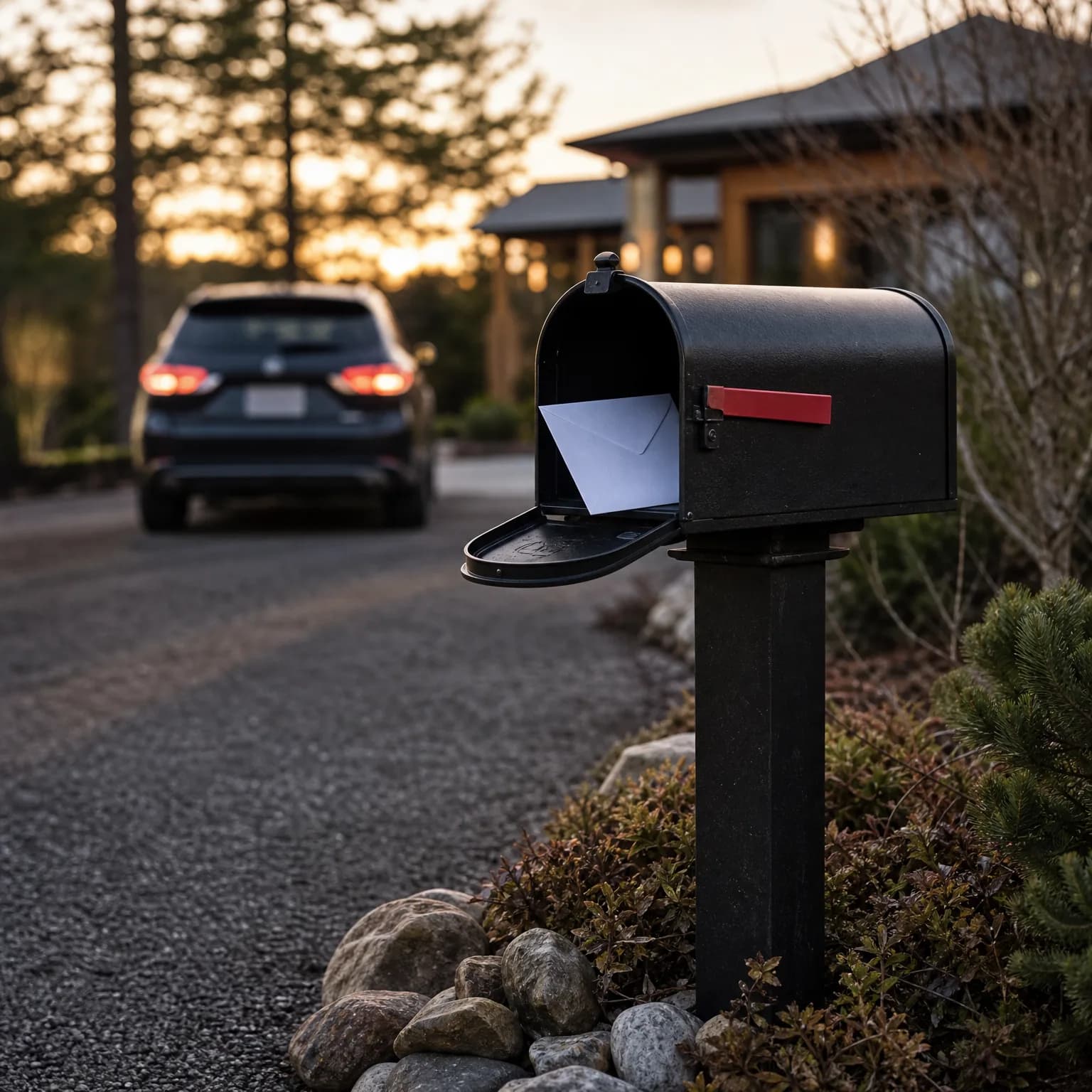
A handful of Florida counties, primarily rural jurisdictions with older case management systems, still mail paper FTA release orders to DHSMV headquarters in Tallahassee. Processing takes 10 to 14 business days from the court date, not 48 hours. Your license remains suspended during this lag even though the judge has already cleared the hold.
Paper-based counties include some circuits in the Panhandle and north-central Florida. The clerk's office cannot confirm which transmission method they use over the phone—you must ask the compliance clerk specifically whether your case will be released electronically through CCIS or by paper order. If the answer is paper, request a certified copy of the release order at your court appearance. You can hand-deliver this to a DHSMV service center to expedite reinstatement rather than waiting for mail processing.
Drivers with immediate employment or medical driving needs should verify transmission method before leaving the courthouse. A two-week delay is manageable if you know it's coming. Discovering it only after your employer checks your license status is not.
What You Must Bring to Your Court Appearance
Florida courts require proof of identity and the case number from your original citation or the bench warrant notice. Bring a valid government-issued ID (passport or expired Florida license both work if your license is currently suspended). If you received a bench warrant notice by mail or during a traffic stop, bring that notice—it contains the warrant number the judge will need to recall the hold.
If the underlying citation was for no insurance, bring proof that you now carry valid liability coverage meeting Florida's $10,000 PIP and $10,000 property damage minimums. The judge will not dismiss the underlying ticket just because you now have insurance, but proof of current coverage demonstrates compliance and may reduce court-imposed penalties. If the original citation carries potential FR-44 requirements (DUI-related offenses, certain aggravated violations), bring your FR-44 certificate if already filed—judges in some circuits consider this when setting reinstatement conditions.
Do not assume a walk-in appearance is allowed. Many Florida counties require you to schedule an FTA hearing through the clerk's office before appearing. Showing up unannounced at the courthouse can result in immediate arrest if the bench warrant is still active. Call the clerk's compliance unit first, provide your case number, and ask whether you need a scheduled hearing or whether walk-in compliance court is available.

Get Back on the Road After a Missed Court Date
Get My Post-FTA Insurance Quote
The Difference Between FTA Hold and Underlying Citation Suspension
Florida drivers with an FTA hold often have two concurrent suspensions: the procedural FTA hold for missing court, and a separate conviction-based suspension for the underlying citation once adjudicated. These are distinct on your driving record and require separate clearance actions.
If your original citation was for driving without insurance, Florida law mandates a separate license suspension under F.S. 324.0221 once the court enters a guilty finding. The FTA hold lifts when the clerk releases it, but the no-insurance suspension remains active until you file proof of insurance with DHSMV and pay the tiered reinstatement fee ($150 first offense, $250 second, $500 third within three years). The $45 FTA reinstatement fee does not cover the insurance-lapse suspension—both fees apply.
If the underlying citation was for a moving violation that added points to your record, the FTA hold is the only suspension. Once cleared, you pay the single $45 reinstatement fee and your license is fully restored. Check your DHSMV driving record after court appearance to identify how many active suspensions remain. The record lists each suspension code separately with its own clearance requirement.

When the Underlying Citation Requires FR-44 Filing
Florida is one of only two states requiring FR-44 certificates instead of SR-22 for certain high-risk violations. If your missed court date was for a DUI citation, reckless driving, or a second offense of driving without insurance, resolving the FTA and paying reinstatement fees is not sufficient. You must also file FR-44 with DHSMV and maintain it for three years before your license is fully restored.
FR-44 mandates liability limits of $100,000 per person, $300,000 per incident for bodily injury, and $50,000 for property damage—substantially higher than Florida's standard $10,000/$10,000 PIP/PDL minimums. Not all carriers write FR-44 policies. In Florida, confirmed FR-44 writers include Progressive, GEICO, State Farm, The General, Dairyland, Bristol West, National General, Infinity, Acceptance, and USAA. Standard-tier carriers like Travelers, Hartford, and Liberty Mutual typically do not offer FR-44 for DUI offenders.
The FR-44 requirement is triggered by the underlying conviction, not the FTA hold itself. If the judge reduces your DUI charge to reckless driving at your FTA hearing, FR-44 may still apply depending on the final disposition. Confirm the adjudicated charge with the clerk before leaving the courthouse, then contact a carrier that writes FR-44 in Florida to obtain coverage and file the certificate with DHSMV. Reinstatement will not process without the FR-44 on file if the conviction mandates it.
Cost Breakdown: Court Fees, Reinstatement, and Insurance
Resolving an FTA hold and restoring your Florida license involves multiple cost layers. The $45 DHSMV reinstatement fee is mandatory for the FTA hold itself. If the underlying citation also triggered a separate suspension (no insurance, DUI, accumulation of points), a second reinstatement fee applies: $150 for first insurance lapse, $250 for second, $500 for third; $475 for DUI-related revocations after completing DUI school and filing FR-44.
Court-imposed costs vary by county and underlying citation. Bench warrant recall fees range from $50 to $150 depending on the circuit. The original traffic citation fine still applies unless the judge dismisses it—fines for no-insurance citations typically run $150 to $500 for first offense. If you request a payment plan at your FTA hearing, most Florida courts impose an additional $25 administrative fee and require a down payment of 10 to 25 percent of the total balance.
If FR-44 filing is required, expect monthly premiums between $140 and $280 for minimum-coverage policies from non-standard carriers. Standard-tier carriers charge $95 to $160 per month for FR-44 when they write it at all, but underwriting restrictions often exclude drivers with DUI convictions within the past three years. Estimates are based on available industry data; individual rates vary by driving history, vehicle, and ZIP code.
Frequently Asked Questions
Can I get a hardship license in Florida while the FTA hold is still active?
No. Florida does not issue Business Purpose Only licenses or any restricted driving privilege while an active Failure to Appear hold remains on your record. You must resolve the FTA in court and obtain the clerk's release to DHSMV before applying for any type of license reinstatement or hardship driving privilege.
Will paying the original traffic ticket online clear the FTA suspension?
No. Online ticket payment resolves the underlying citation but does not recall the bench warrant or lift the FTA hold. You must appear before a judge or magistrate to address the missed court date, even if the ticket itself has been paid. The clerk's office will then transmit the FTA release to DHSMV separately.
How do I know if my county uses electronic FTA release or paper mail?
Ask the clerk's compliance unit directly when you schedule your court appearance. Most Florida circuit and county courts now use CCIS electronic transmission, which updates DHSMV within 48 hours. Rural counties in north-central Florida and the Panhandle may still mail paper release orders, which take 10 to 14 business days to process.
Do I need FR-44 insurance after clearing an FTA hold for a DUI citation?
Yes, if the underlying DUI conviction or guilty plea is entered at your FTA hearing. Florida requires FR-44 certificates with $100,000/$300,000/$50,000 liability limits for three years following DUI reinstatement. The FR-44 requirement is triggered by the DUI conviction itself, not the FTA hold, but both must be resolved before your license is restored.
Can I be arrested at the courthouse when I go to clear my FTA?
Possibly, if the bench warrant is still active and you appear without scheduling a hearing first. Many Florida counties allow walk-in compliance court for minor FTA cases, but some require scheduled hearings. Call the clerk's compliance unit before appearing to confirm the process. Bring valid ID and your case number. Judges typically recall the warrant immediately at the FTA hearing.
What happens if the clerk never sends the FTA release to DHSMV?
Your license remains suspended indefinitely until the release is transmitted. If three business days pass after your court appearance and your driving record still shows an active FTA hold, contact the clerk's compliance unit with your case number and appearance date. Request confirmation that the release was entered into CCIS or mailed to DHSMV. If necessary, obtain a certified copy of the release order and hand-deliver it to a DHSMV service center.
Does the $45 DHSMV reinstatement fee cover both the FTA hold and the underlying citation suspension?
No. Each suspension type requires its own reinstatement fee. The $45 fee clears the FTA hold. If the underlying citation was for no insurance, a separate tiered fee applies: $150 first offense, $250 second, $500 third. DUI-related reinstatements cost $475 after DUI school completion and FR-44 filing. Check your driving record to identify how many active suspensions remain after court clearance.
Related Articles

Florida FTA Release: Court to DHSMV Reinstatement
5/18/2026

Florida FTA Release Fees: Court + DHSMV Costs Explained
5/18/2026

How Long FTA Suspension Lasts in Florida | Clearance
5/18/2026

Clear FL FTA Infraction Without Court: When It Works
5/18/2026

FTA Release: Court vs DMV Routing by State
5/18/2026

FTA Release Process When Court Holds DMV Authority
5/18/2026